Bolzano;I am with Robert Schwaerzer, a musician and researcher of Referat-Volksmusik, he is speaking at the phone looking for an opportunity to discover the music of Alto Adige.He talks to everyone in German and get good hopes, but suddenly his face enlightens; he takes the phone and calls Otto Dellago. While discussing he looks at me making a victory sign: on Saturday his friend will make the usual annual sleigh performance with his "Trio donne Gardena" in one of the valleys of the Dolomites and .. he invites me to follow them.
This is the perfect occasion to learn about a music culture strictly connected to the surrounding mountain environment. The “Trio d’ëiles de Gherdëina cun Otto Dellago” is a group formed by Ladins, an ethnic-linguistic minority of about 30.000 people, divided into the geographical region called ladinia located between Trentino Alto Adige and Northern Veneto.
Even if these people are established in the Italian territory, they have their own culture, language and customs that have been often jeopardized by events in the history of our country. Now they enjoy protection and enhancement.
The meeting has been fixed early in the morning in a mountain dew of Val di Funes that the camper try to reach climbing through steep snow-covered ways. I arrive a little in late, I cannot see anyone and I start worrying but, from the car parking gentle voices of women perfectly in tun echo accompanied by a guitar; I hope to have found them. I rush on the ice with the risk to fall, but the anxiety of the haste is soon cancelled by the harmony of these notes and the landscape. It is peace.
Since many years Monika, Claudia, Petra, and Otto perform a repertoire of religious and profane songs which are exclusively traditional of the alpine area. Between them they speak Ladino or German, but today they try to speak Italian because of me, even if they say " they do not feel really Italians”.Otto plays many instruments. In the custody of his guitar you can find small instruments he is testing, such as the ocarina, or the marranzano (Jew's harp), but he also plays the zither, an instrument widely used in this area in the past. He says that these songs were sang in the family occasions but now they do not sing often. They do it not for recovery or maintenance purposes but just for the pleasure of sharing some moments together.
Among the repertoire of the group there are also some Yodel (see the first part of the movie). This is surely the most northern music of Italy; so northern that seems to be among the clouds. It will be certainly curious to get to Sicily and to compare the two sound landscapes at the opposite sides of our beautiful country. Meanwhile, from up here, I look towards the south, lulled by these notes, daydreaming on the adventure that I expect.
The title of the piece you find here below isCiantia d’amor - Sciche na berca zënza vënt”(Love poetry - Like a boat without wind). It has been composed by Otto Dellago and interpreted by the "Trio de Eilës Gherdëina". It is not a traditional piece like the ones you can listen in the movie. It draws from the tradition but it has definitely a present-day flavor .
Sciche na berca zënza vënt, - like a boat without wind
o n cheder nia depënt, - or a not painted painting
sciche n ciof zënza pavël, - like a flower without butterfly
Andrea da Cortà me había avisado: “Si no venís a verlos en el periodo de carnaval, será difícil escucharlos luego”. Lamentablemente pude llegar a Comelico Superiore solamente un mes después del carnaval y los únicos dos violinistas del pueblo no tienen más ganas de tocar. Para escucharlos habrá que esperar un año.En este pueblo de las Dolomites belluneses se festeja un típico carnaval con las máscaras Matazìns y Matazere (entre otras) y un desfile de músicos que tocan el acordeón, la guitarra, el contrabajo y…el violín.
La Asociación “Gruppo Candide” (www.gruppocandide.it) y la “Union ladina dal Comelgo” son las que me dan la oportunidad de visitar Comelico y conocer su gente y la Polca Saltata), gracias a la habilidad del gran poli-instrumentista Andrea da Cortà (al centro; ver imagen www.altei.it); me invitan para mi “Video show”: la ocasión es perfecta para realizar un sincrético intercambio de opiniones musicales Italianas/Latinoamericanas/Comelicanas.
La idea de organizar un “video show” nace también de la voluntad de encontrarme con los violinistas, sensibilizarlos y, con la excusa de la invitación, ver si pueden tocar algo. Lamentablemente, en el pueblo dicen que sin acordeonista los violinistas no tocan; los organizadores así empiezan la búsqueda telefónica del acordeonista.
Ya llega el atardecer y las luces de la sala y del espectáculo se encienden. Tengo que admitir que la participación del público del Comelico ha sido una de las más calidas (¡y después dicen que los habitantes de los montes son fríos!); todos aquí se conocen y el ambiente es de gran intimidad. Toco el último tema y a los músicos presentes en la sala les pican las manos, desenfundan los instrumentos….y se empieza a bailar. ¿Y los violinistas? Los encontraré el año que viene.
El tema del video es una Polca Saltata. Andrea da Cortà me cuenta que este tipo de baile está presente solo en Comelico Superiore, en Dosoledo, Candide y Padola. Existe también otro oasis que conserva esta música en las cuatro provincias (Génova, Alessandria, Pavia y Piacenza). En todas estas zonas el baile es el mismo, pero los pasos son un poco diferentes. Los que están presentes en la sala son capaces de reconocer la proveniencia de la pareja por el modo de bailar. El violín, utilizado en periodo de carnaval, está desapareciendo; parece que en Comelico Superiore, a parte de los violinistas “fantasma”, no hay nadie que quiera seguir con la tradición. De hecho, la introducción y la gran difusión del acordeón en el repertorio popular reemplazaron, por facilidad técnica y posibilidad de timbre, el uso del instrumento de arco.
.
SEGUIMOS MANANA...
.Traduccion: Sabrina Espeleta
.
Agradecimientos: Andrea da Cortà, Lucio Eiche Clere, Ass. "Gruppo Candide", Manuela da Cortà, il pubblico di Comelico, Union ladina dal Comelgo.
Andrea da Cortà warned me: "If you don’t come to listen to them during carnival it will be difficult to do it after". Unfortunately, I can reach Comelico Superiorejust a month after that time and the only two violinists in the village do not want to play again. We have to wait another year to listen to them. In this village located in the Belluno Dolomites it is celebrated a typical carnival with the masks Matazìn and Matazina (among others) and a procession of accordion, guitar, bass and... violin players. The opportunity to visit Comelico and to know its people and the Polka Saltata has been offered to me by the Association “Gruppo Candide” (www.gruppocandide.it) and the “Union ladina dal Comelgo”. Thanks to the initiative of the multi instruments player Andrea da Cortà(in the center; see picture www.altei.it), they invite me for my “Video show”, thus this is the right opportunity for a syncretic exchange of Italian / Latin American / Comelico musical views.
The idea to organize a "video show" has the purpose to flush out the violinists, to sensitize them and try to make them play with the pretext of the invitation. Unfortunately in the village they say that without the accordionist the violinists do not play, thus the organizers take the phone and start looking for the accordion.
The sun sets and so do the lights of the theatre and the show begins. I must say that the participation of Comelico audience was one of the warmest (and they say that the inhabitants of the mountains are cold!), everybody knows each other and the atmosphere is very intimate. I play the last piece and the musicians start being itching to play, they take out their instruments and….the dancing is opened .... What about the violinists? I will find them next year.
The piece of the movie is aPolka Saltata. Andrea da Cortà tells me that this type of dance is present only in Comelico Superiore, in Dosoledo, Candide and Padula. Then there is another conservative oasis in the Four Provinces (Genoa, Alessandria, Pavia and
Piacenza ). In all these places the dance is the same, but the steps are slightly different. The people present at the show are able to recognize the origin of the couple by the way they dance. The violin, formerly used for this type of music, seems to be doomed to disappear. In Comelico Superiore, a part from the two "ghost" violinists there is nobody ready to continue the tradition. Moreover, the introduction and wide dissemination of the accordion in popular repertoire have substituted the use of the strings due to the technical easiness an the timbre possibilities.
TO BE CONTINUED...
Thanks to: Andrea da Cortà, Lucio Eiche Clere, Ass. "Gruppo Candide", Manuela da Cortà, il pubblico di Comelico, Union ladina dal Comelgo.
Quella del Comelico(vedi post sotto) non era la prima visita del cammino della musica nel Cadore veneto; pochi giorni prima il camper aveva virato da queste parti facendo tappa prima di raggiungere il Trentino Alto Adige (vedi post: Musica tra le nuvole). Il pretesto era quello di conoscere Andrea da Cortà, che finora avevo solo sentito per telefono (ho decine di contatti sparsi nel territorio italiano che mi forniscono preziose informazioni sul nostro patrimonio musicale, dei quali conosco bene la voce ma la faccia posso solo immaginarmela).
Ad Andrea non piaceva l’idea che la mia visita fosse infruttuosa dal punto di vista della documentazione. Voleva che me ne andassi con almeno la registrazione di un musicista veneto. Ricordo che un giorno mi aveva avvisato che da queste parti solitamente non è ben accetto il forestiero che arriva con registratore e quant’altro. Io avevo risposto dicendo che anche io del resto sono veneto. La sua risposta era stata tanto secca quanto sorprendente: “Ancora peggio”.
Contro ogni previsione, Andrea riesce a sfilare un sì da un signore che suona il mandolino a Foppa di Forno di Zoldo. Nemmeno lui ci crede. È un lunedì molto freddo, e la neve è alta almeno un metro e mezzo ai bordi delle strade.
Al nostro arrivo Arnoldo Alessio ci sta aspettando fuori... sta aspettando anche altri due suoi amici musici, un fisarmonicista e un chitarrista. Mi avvisa che quest’ultimo non vuole assolutamente essere ripreso o registrato. Poco male penso, “almeno posso ascoltarlo io”. Inganniamo l’attesa con del buon vino servito con del formaggio. … parla in dialetto e io che sono veneto, non ci capisco nulla. Andrea, che vive a pochi km di distanza (Pieve di Cadore) capisce, ma non tutto. È sorprendente come in Italia i dialetti siano così radicalmente differenti tra paesi così poco distanti l’uno dall’altro.
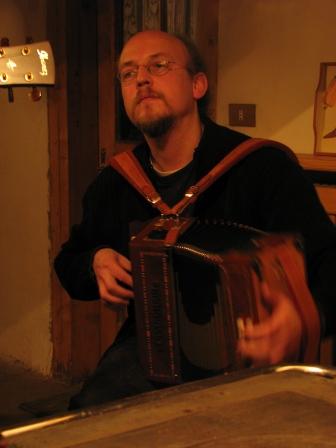
Quando la formazione è al completo e il ghiaccio è rotto, ci spostiamo ai piani inferiori e i tre musici sfornano tutto il loro repertorio che varia dalla canzone veneta più tradizionale a quella italiana più nazionalizzata. Suoniamo anche io e ed Andrea con il suo organetto. Mi azzardo a tirare fuori gli arnesi della registrazione. Guardo il chitarrista come un cagnolino guarda il padrone dopo aver commesso un malanno. Lui ci pensa un attimo e poi mi dice “Ma sì dai!, Non c’è problema, facciamo uno strappo alla regola”.
.
È notte tarda quando la serata si conclude, io e Andrea siamo super soddisfatti, i tre amici musici anche. Ci lasciamo con grande mutua ammirazione e con la certezza che le buone intenzioni e l’umiltà suggellate dal far musica, siano in grado di uniformare le moltitudini ed abbattere qualsiasi preconcetto mentale.
NOTE INTERESSANTI:
Alessio è forse uno degli ultimi mandolinisti rimasti nella zona. Racconta che i loro figli non si sono mai avvicinati a questa tradizione anche perché sono emigrati all’estero per lavorare. Come si nota nel filmato, il repertorio del gruppo è eterogeneo e i componenti dicono che hanno appreso i pezzi ad orecchio, ascoltandoli da altri musicisti o parenti, e poi li hanno reinterpretati secondo le loro capacità mnemonico/tecniche, o in base a gusti personali. Durante la serata si sono presentate diverse occasioni dove la stessa melodia interpretata dal gruppo, la conosceva anche Andrea ma riferita a musiche differenti (ASCOLTA LA CONVERSAZIONE DELL'MP3 IN BASSO). Questo sta ad indicare, a mio avviso, quanto il movimento delle masse umane porti con sé un naturale scambio e assorbimento di cultura musicale; non può esistere quindi una precisa categorizzazione della musica tradizionale, né un demanio assoluto di una musica né una preciso significato del termine “TRADIZIONE”.
un martedì sera in un parcheggio nella Milano metropolitana, RETE 104 entra negli studi de "Il Cammino della Musica". Intervista all'interno del camper !!!






 (p)Link
 Commenti
 Storico
 Stampa


 Andrea da Cortà me había avisado:
 La idea de organizar un “video show” nace también de la voluntad de encontrarme con los violinistas, sensibilizarlos y, con la excusa de la invitación, ver si pueden tocar algo. Lamentablemente, en el pueblo dicen que sin acordeonista los violinistas no tocan; los organizadores así empiezan la búsqueda telefónica del acordeonista.
 Quella del Comelico
  Contro ogni previsione, Andrea riesce a sfilare un sì da un signore che suona il mandolino a
  Poco male penso, “almeno posso ascoltarlo io”. Inganniamo l’attesa con del buon vino servito con del formaggio. … parla in dialetto e io che sono veneto, non ci capisco nulla. Andrea, che vive a pochi km di distanza (Pieve di Cadore) capisce, ma non tutto. È sorprendente come in Italia i dialetti siano così radicalmente differenti tra paesi così poco distanti l’uno dall’altro.


 Feed RSS 0.91
 Feed Atom 0.3